
What are Object Classes?
We use Object classes to keep records of the same type in one place; they are like a database table. This allows us to create and run processes in the Sequencer against these records, ie an Object class.
It also allows us to define individual Tasks of the "Update object record" type and groups of tasks - Task group templates - for a specific Object class.
A User's Role and/or Object class permissions will determine whether they have visibility of Object classes in the System Configuration section of the main left hand navigation menu. A User with any of the Object class permissions shown below will see the Object class menu item.
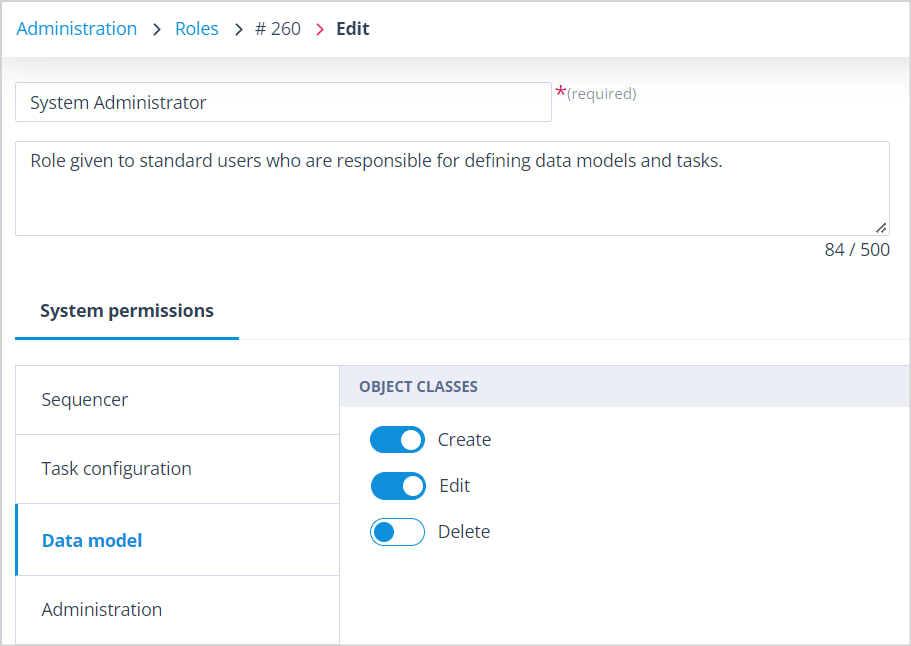
It is worth noting that additional permissions are set for each Object class. This is done by creating Permission sets for groups of Users. Permissions will relate to the Object class itself and to Object records and Tasks associated with it. Find out more about editing object class permissions.
Object classes list
The default column configuration for the Object classes list is shown below.
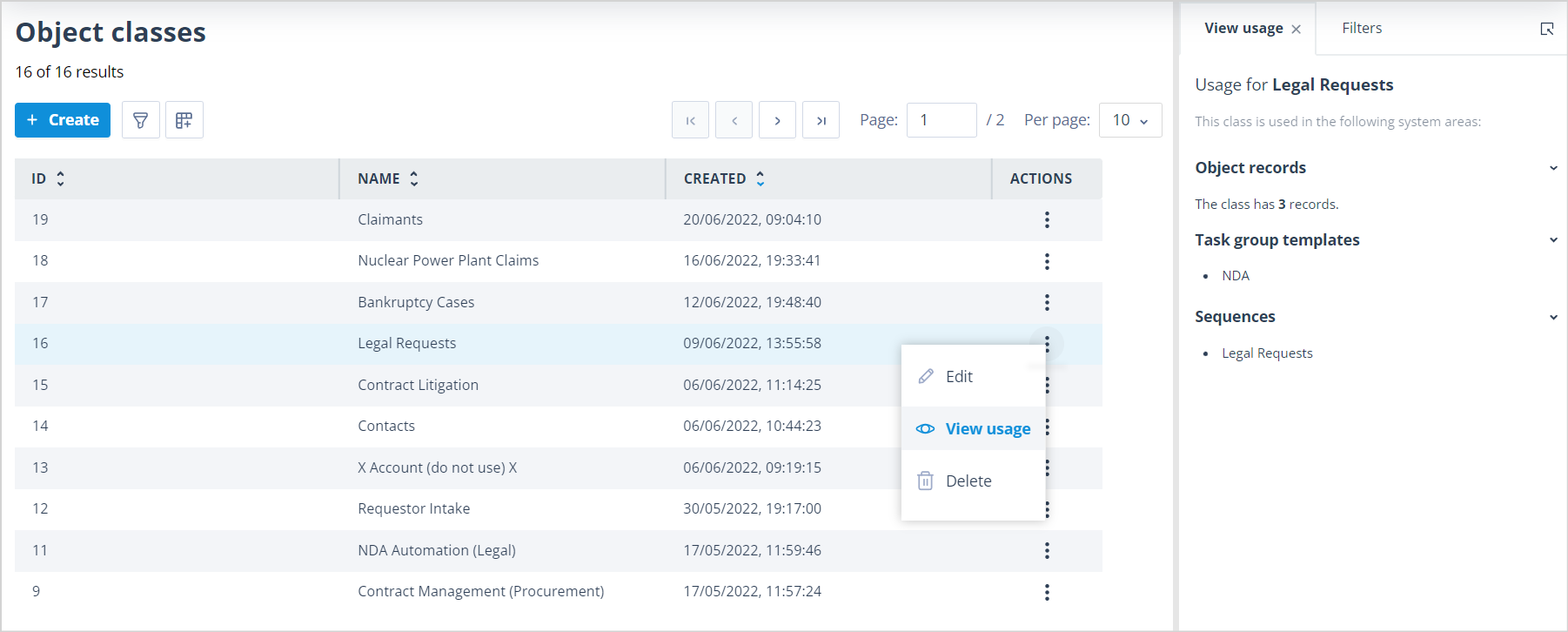
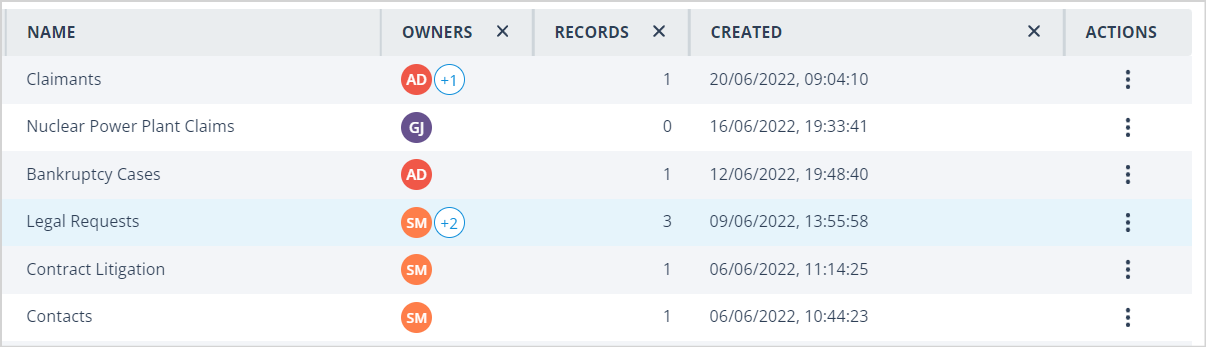
Other useful columns are:
- Owners - this shows the avatar of the User who is the Class owner if there is only one, or the avatar of the oldest Owner and the number of additional Owners if there is more than one.
- Records - this shows the number of records in the Object class.
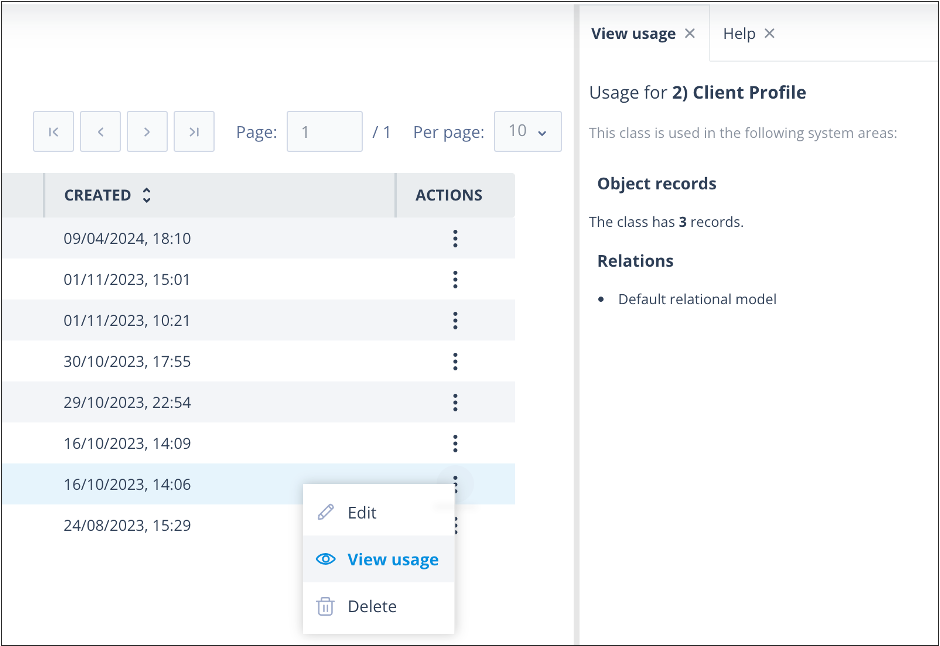
The unique feature in the Actions menu for an Object class is the View usage option. This will show:
- How many records are associated to the Object class
- A list of Task group templates associated with the Object class
- A list of Sequences which have been created for the Object class
- Whether related to another object class
Find out more about list page features.
Visibility of the list will depend on a User's permissions, but Users with the Super admin account type will have visibility of all Object classes in the list.
Useful info
- You can have up to 10,000 Object classes in your system.
- You can define up to 2,000 fields per Object class.
- Each Object class can have up to 500,000 records associated with it.